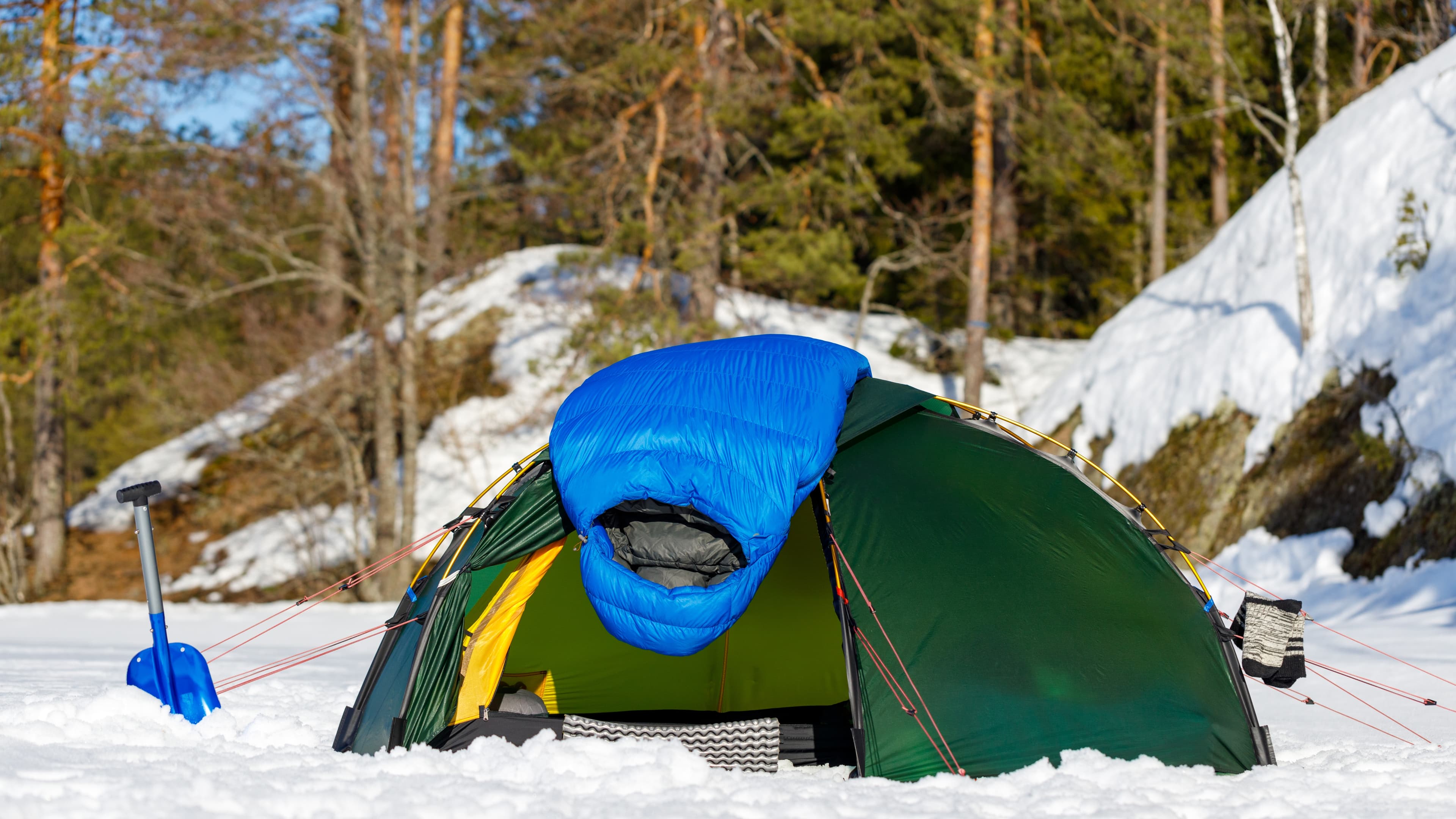
The gap between a comfortable winter night and a dangerous one is narrower than most first-timers expect.
Winter camping is not a harder version of summer camping. It is a different activity with different failure modes, and the gap between a comfortable night and a dangerous one is narrower than most first-timers expect. These winter camping tips cover the gear decisions, safety principles, and organizational habits that actually matter when temperatures drop below freezing.
The skills are learnable, the gear is well-understood, and the experience of a quiet, snow-covered camp is genuinely unlike anything the summer crowds can offer.
In this guide
- Sleeping warm: bags, pads, and the numbers that matter
- Layering for cold-weather camping
- Choosing and setting up a winter campsite
- Staying warm through the night
- Food, hydration, and cold-weather calorie needs
- Organization in freezing conditions: the part most guides skip
- Safety: hypothermia, frostbite, and emergency prep
- Planning a winter camp trip
- Frequently asked questions
- Start with one night
Sleeping Warm: Bags, Pads, and the Numbers That Matter
Most cold-weather camping problems start here. People underestimate the cold, overestimate their gear, and wake up shivering at 2 a.m.
Sleeping Bag Temperature Ratings
Sleeping bag ratings follow the EN/ISO 23537 standard, which most manufacturers have used since 2005 according to Camplabx. The key distinction is between comfort and survival ratings. As TrailMapz notes, a bag rated to 20°F is a survival rating, not a comfort rating. You will survive at that temperature. You will not sleep well.
TrailMapz recommends buying a bag rated 15 to 20 degrees below your expected overnight low. If the forecast says 20°F, you want a bag rated to 0°F or 5°F. That margin accounts for wind chill, humidity, and the fact that your body heat output varies with fatigue and nutrition.
Sleeping Pad R-Values
Your sleeping bag does almost nothing from the bottom. Ground contact pulls heat out of your body faster than cold air does. The sleeping pad is not optional insulation. It is the most important insulation you have.
According to northwoodswisconsin.com, sleeping pads with an R-value of 4.5 or higher are required for temperatures below 20°F. For sub-zero nights, that same source recommends an R-value of 5 or above. Stacking two pads (a closed-cell foam pad under an inflatable) is a common tactic for deep cold. The foam pad also protects the inflatable from puncture on frozen ground.
Layering for Cold-Weather Camping
The layering system for winter camping is the same one used for winter hiking, with one important difference: camp involves long periods of stillness, which means you lose heat faster than when moving.
Three layers:
- Base layer: Moisture-wicking, next to skin. Merino wool or synthetic. Never cotton. Cotton holds moisture and accelerates heat loss.
- Mid layer: Insulation. Down or synthetic puffy, fleece, or both. This is where most of your warmth comes from at rest.
- Outer shell: Wind and moisture protection. A hardshell or softshell depending on conditions. In camp, a wind-resistant layer matters more than most people expect.
The mistake most people make is not bringing enough mid-layer options. You need a dedicated sleep layer that stays dry and never gets worn while moving. Wet insulation from sweat is one of the fastest ways to have a miserable night.
Choosing and Setting Up a Winter Campsite
Where you sleep matters as much as what you sleep in. Cold air is heavy and sinks. Camping in a valley bottom or a bowl-shaped depression means you are sleeping in the coldest spot in the landscape. Look for sites on slight rises or in areas with natural windbreaks (a tree line, a rock face, a ridge) without being fully exposed on top.
Avoid camping directly under trees loaded with snow. A branch dump at 3 a.m. is startling at best and dangerous at worst.
For shelter, a four-season tent is the right tool for serious winter conditions. Three-season tents can work in mild cold but struggle with heavy snow load and sustained wind. Pitch with the tent door facing away from the prevailing wind. Use snow stakes, or bury your regular stakes if the ground is frozen solid.
Staying Warm Through the Night
Getting into a warm sleeping bag is easier than warming up a cold one. The habits that make the difference:
- Change into dry sleep clothes before bed. The clothes you wore all day have absorbed sweat. Sleeping in them means sleeping in moisture.
- Eat before sleeping. Your body generates heat by burning calories. A calorie-dense snack before bed gives your metabolism something to work with overnight.
- Pre-warm your bag. Do 20 jumping jacks before getting in, or use a hot water bottle inside the bag. Starting warm is far easier than recovering from cold.
- Keep tomorrow's base layer inside the bag. Putting on frozen clothes in the morning is a morale problem. Keeping them in the bag solves it.
- Vent slightly. Breathing inside your bag adds moisture. Keep your face out, and crack the tent slightly if condensation is building on the walls.
Food, Hydration, and Cold-Weather Calorie Needs
Camplabx notes that cold-weather camping can burn 30 to 50% more calories than summer camping. Your body is working constantly to maintain core temperature, even at rest. This is not the trip to ration food.
High-fat, high-calorie foods perform better in cold weather than carbohydrate-heavy options. Nuts, cheese, salami, peanut butter, and chocolate are camp staples for good reason. Hot meals matter more for morale than for warmth, but they do both.
Hydration is easy to neglect in cold weather because you do not feel thirsty the same way you do in summer heat. Dehydration impairs your body's ability to regulate temperature. Drink consistently even when you do not feel like it.
Water management in freezing temperatures requires planning. Keep a water bottle inside your sleeping bag at night to prevent freezing. If you are melting snow, know that it takes significant fuel and time. Plan accordingly.
Organization in Freezing Conditions: The Part Most Guides Skip
This is where winter camping actually falls apart for most people. Not hypothermia. Not bad gear. Chaos.
When it is 15°F and you are wearing gloves, you cannot rifle through a disorganized pack looking for your headlamp. Everything takes longer in the cold. Fumbling with zippers, digging through stuff sacks, and retracing steps to find misplaced gear costs body heat and patience.
Pack and Label for Gloved Hands
Use large-pull zippers or attach loops to zipper pulls. Store items you need at night (headlamp, water bottle, emergency layers) in a consistent spot, every night. Color-coded stuff sacks help when your hands are numb and your brain is tired.
Wet Gear Segregation
Wet gear and dry gear must never share the same bag. Designate a stuff sack or dry bag for anything that has been in contact with snow or sweat. Wet boots go in a separate bag at the bottom of the tent vestibule, not inside the sleeping area.
Morning and Bedtime Routines
Establish a fixed sequence for breaking camp and setting up camp. Do it the same way every time. This is not about being rigid. It is about reducing decision fatigue when you are cold, tired, and working in gloves. Know where your stove goes, where your water treatment goes, where your sleep kit goes.
Electronics and Battery Performance
Cold kills battery performance fast. Keep your phone, GPS, and power bank inside your sleeping bag or in an inner jacket pocket. A device that shows 40% battery at room temperature may show 5% at 10°F. Plan for this. Carry a dedicated power bank and keep it warm.
Safety: Hypothermia, Frostbite, and Emergency Prep
Winter camping safety is not about fear. It is about knowing the signs and having a plan before you need one.
Hypothermia begins when your core temperature drops. Early signs are shivering, confusion, and slurred speech. The fix is warmth, dry clothes, and calories, not just more layers on top of wet ones. Anyone showing signs of hypothermia needs to get dry and warm immediately.
Frostbite affects extremities first: toes, fingers, nose, ears. Numbness followed by a waxy or discolored appearance is the warning sign. Rewarm gently with body heat. Do not rub frostbitten skin.
For emergency prep:
- Tell someone where you are going and when you expect to return
- Carry a fire-starting kit even if you do not plan to use it
- Know the fastest exit route from your campsite
- Keep an emergency bivy or space blanket accessible, not buried in your pack
Planning a Winter Camp Trip
The logistics of a winter camping trip are more complex than a summer outing. Access roads close, permit requirements change seasonally, and campsite availability shifts with snow conditions. If you are planning a multi-day winter backcountry trip, the guide on planning a multi-day backcountry trip with campsites and resupply covers the coordination layer in detail.
For gear decisions, the ultralight backpacking gear guide is worth reading alongside this one. The weight tradeoffs in winter are different from summer, but the principles of intentional selection still apply.
If you want help turning a winter trip idea into a coordinated, day-by-day Xpedition that accounts for your group size, skill level, vehicle, and conditions, Xavier at xploreum.io can build that plan in under a minute from a plain-language description.
Frequently asked questions
What sleeping bag temperature rating do I need for winter camping?
Buy a bag rated 15 to 20 degrees below your expected overnight low, not at it. A bag rated to 20°F is a survival rating, not a comfort rating. If the forecast low is 20°F, you want a bag rated to 0°F or 5°F to sleep comfortably.
What R-value sleeping pad do I need for winter camping?
For temperatures below 20°F, you need a sleeping pad with an R-value of at least 4.5. For sub-zero conditions, an R-value of 5 or higher is recommended. Stacking a closed-cell foam pad under an inflatable is a common approach for deep cold.
How do you stay warm in a tent when it is below freezing?
Change into dry sleep clothes before bed, eat a calorie-dense snack, pre-warm your sleeping bag with movement or a hot water bottle, and keep tomorrow's base layer inside your bag overnight. Never sleep in clothes you wore while active. Moisture in the fabric works against you.
What are the biggest mistakes first-time winter campers make?
Underrating their sleeping bag, neglecting the sleeping pad, wearing cotton, and failing to organize gear for gloved-hand access. Disorganization costs more body heat than most people expect. Fumbling for gear in the cold is a real problem.
How do you manage electronics and batteries in cold weather camping?
Keep phones, GPS devices, and power banks in your sleeping bag or an inner jacket pocket. Cold dramatically reduces battery capacity. A device showing 40% charge at room temperature can drop to near zero at 10°F.
Is winter camping safe for beginners?
Yes, with the right gear and preparation. Start with a one-night trip in mild cold, close to the trailhead or a road. Know the signs of hypothermia and frostbite before you go. Tell someone your plan and expected return time.
How many more calories do you burn winter camping compared to summer?
According to Camplabx, cold-weather camping can burn 30 to 50% more calories than summer camping. Your body works continuously to maintain core temperature. Plan for larger meals and more frequent snacking than you would on a warm-weather trip.
Start With One Night
The best way to learn winter camping is to do it once, close to home, in conditions that are cold but not extreme. One night at a familiar campsite in 25°F weather teaches you more than any article can. You will learn which pieces of your sleep system need upgrading, how your organization holds up with gloves on, and whether your morning routine works when you can see your breath.
Build from there. The gear gets dialed in. The routines become automatic. And the quiet of a winter camp (no crowds, no insects, just cold air and stillness) becomes the reason you keep going back.