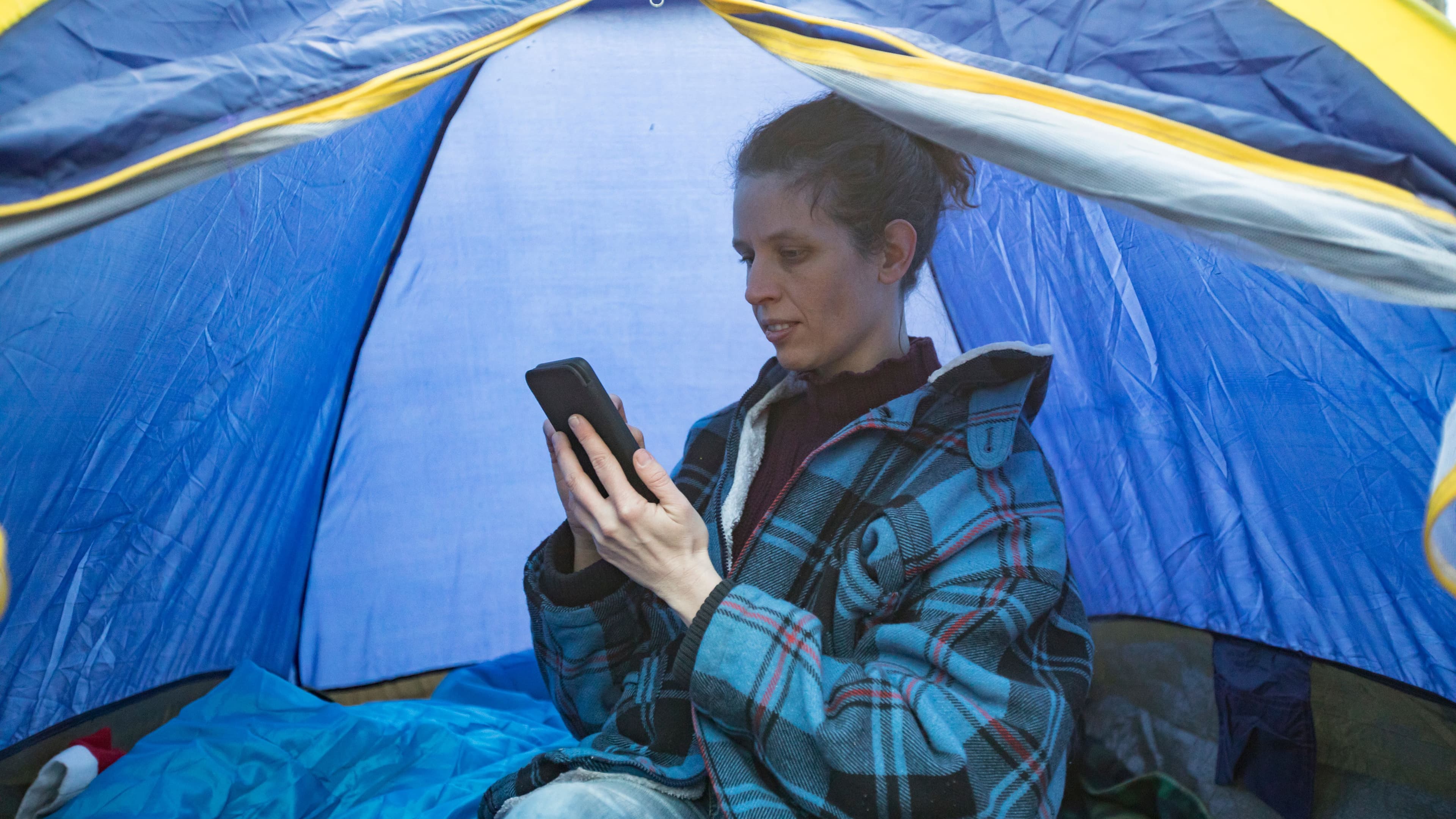
It's almost midnight and I have seventeen tabs open.
Two are weather models that disagree with each other. One is a 2017 forum thread where a stranger named "OverlandDan" swears the third section of the trail is passable in a stock 4Runner, and one is a different thread where another stranger swears it absolutely is not. I have a campground reservation page that keeps timing out, a fuel-range calculator, a satellite view I've been staring at so long the rivers have started to look like roads.
We were supposed to leave in two days. I had been "planning" for most of a week.
This is the part of the outdoors nobody photographs.
I've spent the better part of twenty years out there, backpacking, overlanding, off-roading, the long stupid road trips, the wildlife trips that fall apart and somehow become the best ones. And somewhere along the way I became the person in every group who plans. Reservations, permits, routes, fuel stops, the campground, the backup campground, the backup plan for the backup plan. I got good at it. I also started to resent it.
Because here's the thing I've never been able to say out loud at a trailhead: the trip is almost always easier than the planning. The harder and more ambitious the adventure, the worse that ratio gets. Want three days in Idaho's backcountry? Budget six hours of research first, trails, closures, water, whether your rig actually clears that one notorious section some guy mentioned online nine years ago.
Most people never feel this, and not for the reason you'd think.
The barrier was never interest
There's a tired idea that people just aren't that into the outdoors. Anyone who's taken a first-timer out knows how wrong that is, you watch the exact moment someone realizes the sky is bigger than they remembered. The growth of overlanding, van life, climbing, all of it tells the real story. People want this.
What they don't want is to spend ten hours figuring out where to sleep on night three.
Planning has become the tax we pay for adventure. And the more ambitious the trip, the higher the tax. So millions of people quietly settle for something smaller than what they actually wanted, not because they couldn't handle the real thing, but because they couldn't find the weekend to research it.
That gap, between what people want and what they end up doing, is the whole game. It's also where I think AI is about to change the outdoors more than GPS did.
A short history of outdoor knowledge
For most of human history, this knowledge was local. You wanted the route through the pass, you found the person who'd walked it. Then came maps, then guidebooks, then GPS, then forums full of OverlandDans. Each step pulled information a little further out of one person's head and into reach.
AI is the next step in that line. Not because it knows everything, it very much does not, and I'll get to that, but because it's unreasonably good at one specific thing: taking an overwhelming pile of scattered information and helping you make a decision.
Picture a planning partner that already knows your vehicle, your experience level, your budget, the four days you actually have, how you like to camp, the gear in your garage, the forecast, the campgrounds with openings, and the two viable routes between them. You stop assembling. You start choosing. You spend your night refining a trip instead of reconstructing one from browser tabs.
The shift sounds small. It isn't. You stop researching and you start exploring, and those turn out to be completely different states of mind.
"Won't this kill the adventure?"
This is the first thing people say to me, every time, and I understand it. We've heard versions of it before. GPS was going to ruin navigation. Digital cameras were going to ruin photography. Online booking was going to ruin travel. The tools changed; human curiosity didn't move an inch.
Nobody climbs a mountain for the permit paperwork. Nobody crosses a desert because they love comparing reservation systems. The adventure was never the logistics. The adventure is the adventure... the logistics are just the toll booth in front of it, and I have never once heard someone come home and tell a great story about the toll booth.
The part that actually scares me
I'd be lying if I made this sound easy, so here's the honest version: today's AI can get you hurt.
It will invent a campsite. It will route you down a trail that doesn't connect. It will recommend, with total confidence, a water source that dried up two summers ago. In most software, a hallucination is an annoyance. In the backcountry, a confident wrong answer is a different category of problem.
So I don't think the future is AI replacing expertise. I think it's AI standing next to verified data, real conditions, and human judgment and knowing the difference between the three. The outdoor AI worth trusting won't be the one that generates the most words. It'll be the one that knows when to check, when to ask you a question, and when to say I'm not sure, confirm this before you commit. The future belongs to the AI that helps you decide, not the one that pretends there's nothing left to decide.
That's a harder thing to build. It's also the only version worth building.
I've argued the technical half of this elsewhere: why general-purpose AI will never be enough for outdoor adventure planning is about what a conversation alone cannot hold, and Xavier vs ChatGPT for trip planning puts the difference side by side.
Frequently asked questions
What is an AI expedition partner?
An AI that helps you plan and prepare a trip rather than just describe one. The difference is what it leaves you holding: not a block of text, but a route, a sequence of days, and stops you can actually navigate to. It is a planning partner, not a substitute for judgment on the ground.
Will AI replace mountain guides and outfitters?
No, and I would not want to build the thing that tried. A guide reads conditions in front of them, makes calls under pressure, and carries responsibility for a group. None of that is planning work. What AI can take off the table is the twelve hours of research between having the idea and being ready to go.
Can you trust AI for backcountry trip planning?
Trust it for structure, verify the facts. Permits, closures, water sources, and road conditions change often enough that the managing agency is the only authority worth relying on. The AI worth using is the one that tells you which things it is unsure about instead of stating everything with the same confidence.
Why does planning an adventure trip take so long?
Because the information lives in a dozen places that were never designed to talk to each other: trail databases, campsite reservation systems, agency alerts, weather, forums, maps. Every one of them answers a different part of the question, and assembling them is the actual work.
How is an AI expedition partner different from asking a chatbot?
A chatbot returns an answer and forgets it. An expedition partner holds the plan (the map, the order of the days, the stops) and reworks it when something changes. The conversation is the way in, not the whole product.
The bigger reason I care
If I'm honest, convenience isn't what keeps me up working on this. Access is.
If planning gets dramatically easier, the people who currently opt out, the busy ones, the intimidated ones, the ones who'd love it but can't find the on-ramp, start to opt in. More of them visit public land. More of them have the night under the sky that rewires something. And people protect what they love. The more people who build a real relationship with the outdoors, the more people there are who care whether it's still there in thirty years.
That's the future I'm actually trying to reach. Not a slicker app. More people outside.
I don't think AI will replace guides, or experience, or the friendships and mistakes and 2 a.m. forum-thread arguments that make a trip worth retelling. But I do believe that within the next decade, most explorers will have an AI partner helping them plan and prepare, not because technology is replacing the outdoors, but because it's finally getting more people to the trailhead.
That's the part I can't wait to see.
Turn what you read into a trip.
Bring the route, campsites, and stops together with Xavier.
Sources
- Outdoor Industry Association: Reports library, including the Outdoor Participation Trends Report. Accessed October 5, 2026.
- CBS Sacramento: Hikers rescued from California's Mount Shasta after ascent planned with incorrect AI information. Accessed October 5, 2026.