
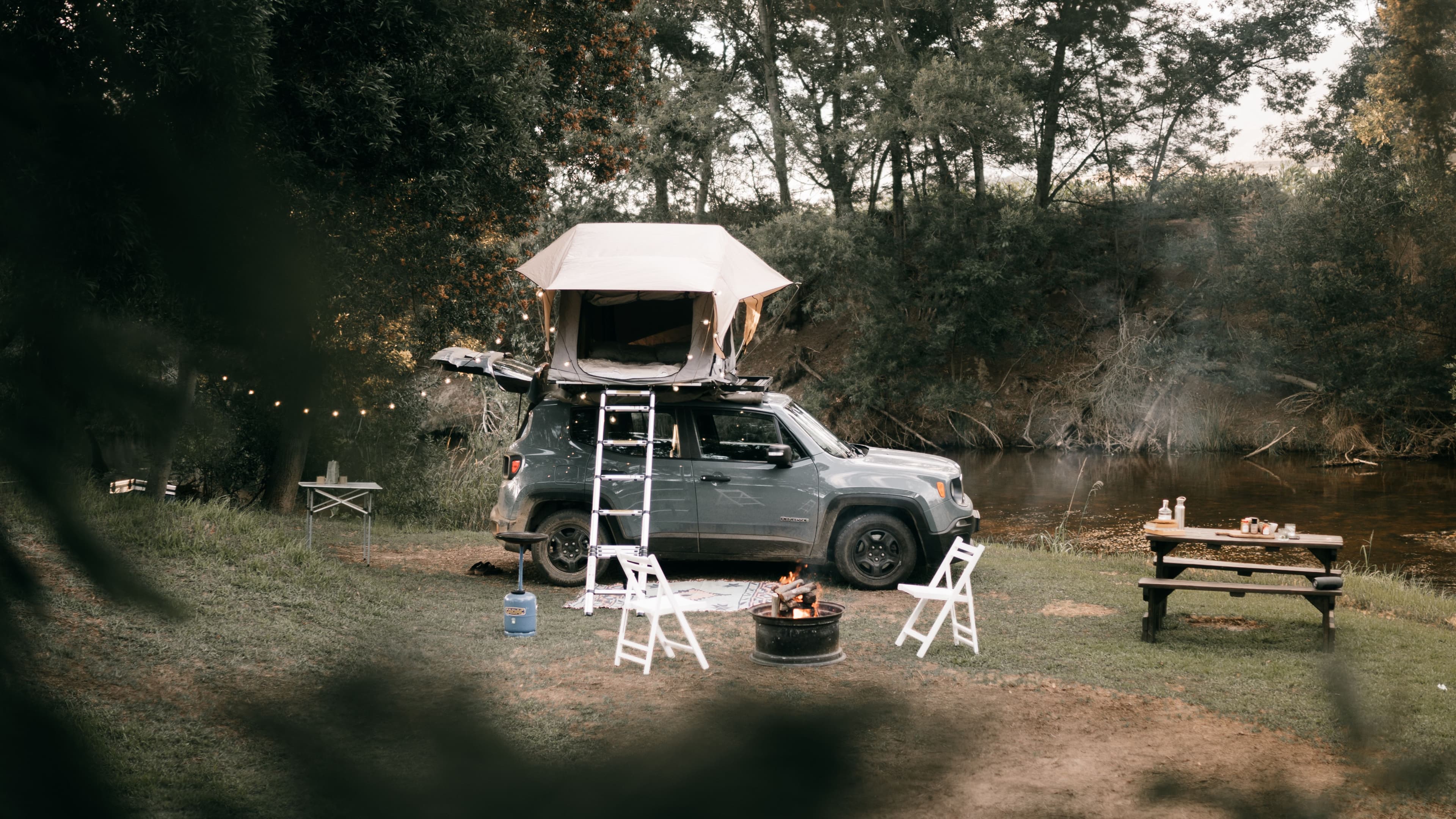
Most car camping tips online tell you to bring a sleeping bag and pack sunscreen. That is not where trips go wrong. The decisions that actually determine whether your first trip runs smoothly are site selection, camp setup, and a handful of mistakes that are easy to avoid once you know what they are.
Get those three things right and the rest tends to fall into place.
What Car Camping Actually Is (and Why It Matters for Planning)
Car camping means sleeping at or very near your vehicle. Your car is your gear locker, your shelter backup, and your resupply point. You are not hiking miles to a backcountry site. You are driving to a designated campsite, parking, and setting up.
That sounds simple. The planning friction is different from backpacking, not absent. You still need to choose the right campground, reserve the right site, understand access and rules, and set up a functional camp. First-timers often underestimate the site selection step because they assume all campgrounds are interchangeable. They are not.
How to Choose a Campground That Matches Your Trip
The campground you choose sets the ceiling on your experience. A poorly chosen one means noise, crowding, poor access, or terrain that makes setup harder than it needs to be.
Developed vs. Dispersed Camping
Developed campgrounds have designated sites, usually with a fire ring, a picnic table, and a parking pad. Many have restrooms, some have showers, and popular ones have electrical hookups. These are the right starting point for first-timers.
Dispersed camping means camping on public land outside a designated campground, typically on Bureau of Land Management or National Forest land. No amenities, no designated sites, no one to ask for help. It is a legitimate option for experienced campers and a poor choice for a first trip.
Start with a developed campground. You can explore dispersed camping once you know what you actually need.
National Park, National Forest, and State Park Campgrounds
Each land type has different reservation systems, rules, and fee structures.
- National Park campgrounds are heavily used and require advance reservations, often months out. Recreation.gov handles most bookings.
- National Forest campgrounds vary widely. Some require reservations, some are first-come-first-served, and fees are generally lower than national parks.
- State park campgrounds are often the most accessible for first-timers. Reservation systems are state-specific, sites are frequently available with a few weeks' notice, and amenities tend to be consistent.
Book early. Summer weekends at popular campgrounds fill within minutes of the reservation window opening. If you are planning a national park trip, check availability as soon as your dates are set.
What to Look for in a Specific Site
Once you have chosen a campground, the individual site matters. When browsing a reservation platform, look for:
- Shade coverage: a shaded site is significantly cooler in summer and more comfortable in rain
- Level ground: sleeping on a slope is uncomfortable; pitching a tent on uneven ground is harder than it sounds
- Site size: confirm the site can fit your vehicle plus your tent without crowding
- Distance from restrooms: close enough to be convenient, far enough to avoid foot traffic at 2 a.m.
- Proximity to water: sites near streams or lakes are popular but tend to be noisier and attract more insects
- Neighbor density: some campgrounds pack sites tightly; if privacy matters, look for sites at the end of loops or separated by vegetation
Many reservation platforms show photos and site dimensions. Use them. A site that looks spacious in the listing but has a sloped parking pad and no shade is a different experience than one that looks ordinary but sits at the end of a quiet loop.
Camp Setup Steps That First-Timers Miss
Arriving at a campsite and setting up efficiently takes practice. These are the steps most first-timers skip or get wrong.
Set Up Before Dark
This is the single most common mistake. Arriving at 5 p.m. feels like plenty of time. By the time you unload, figure out the tent, realize you forgot stakes, and locate the camp kitchen, it is dark. Setting up a tent in the dark with a headlamp is slow, frustrating, and easy to get wrong.
Aim to arrive with at least 2 hours of daylight. If your drive is long, plan a stop or leave earlier.
Pitch the Tent First
Before you set up chairs, before you start cooking, before you unpack anything else, pitch the tent. This is your shelter. If weather moves in, you want it up. If you are missing a pole or a stake, you want to know while there is still time to improvise.
Walk the site before you commit to a spot. Look for:
- Roots and rocks under the surface that will make sleeping uncomfortable
- Low ground that will collect water if it rains
- Overhead branches that could drop debris or become a hazard in wind
Orient Your Tent Correctly
The tent door should face away from prevailing wind when possible. In most campgrounds, you will not know wind direction in advance, but the site will give you clues. Look at which direction nearby trees lean, where other campers have oriented their tents, and where the natural windbreak is.
Keep the tent door accessible without stepping over your cooking area or tripping over gear.
Build a Functional Kitchen Area
Car camping gives you access to a full cooler and a camp stove, which means you can eat well. The kitchen setup matters for both convenience and safety.
- Set up your stove on a stable, level surface away from the tent
- Keep the stove clear of overhanging branches and away from dry grass
- Position the cooler in shade and keep it closed when not in use: this extends ice life significantly
- Designate a specific spot for food prep, cooking, and washing up so you are not moving things around constantly
Food storage rules vary by location. In bear country, food must be stored in a bear canister or bear box when not in use. This is not optional. Check the campground's specific rules before you arrive.
Manage Your Lighting
Most first-timers bring one flashlight. Bring more. You need:
- A headlamp per person: hands-free lighting for cooking, setting up, and navigating to the restroom at night
- A camp lantern: ambient light for the table and common area
- Spare batteries or a charged power bank: lights that die on night one are a real problem
String lights are optional but genuinely improve the experience on multi-night trips.
What to Pack: The Gear That Actually Matters
Car camping removes the weight constraint that shapes backpacking decisions. You can bring more. The mistake is bringing the wrong things or forgetting the basics.
The Non-Negotiables
- Tent with footprint: a footprint protects the tent floor and extends its life; do not skip it
- Sleeping bag rated for the expected low temperature: check nighttime lows at your destination, not just daytime highs; temperatures drop faster in the mountains than most first-timers expect
- Sleeping pad: insulation from the ground matters as much as the sleeping bag; a foam pad or inflatable pad provides both
- Camp stove and fuel: a two-burner propane stove is the standard for car camping; bring more fuel than you think you need
- Cooler with ice: block ice lasts longer than cubed; pre-chill the cooler before loading food
- Camp chairs and a table: you will spend more time sitting at camp than you expect
- Headlamps and a lantern: covered above
- First aid kit: a compact kit that covers cuts, blisters, and allergic reactions at minimum
- Fire-starting supplies: lighter, waterproof matches, and firestarter; do not rely on one method
What First-Timers Overpack
- Duplicate cooking gear (two spatulas, three pots)
- Clothing for every weather scenario, resulting in bags that cannot close
- Electronics and entertainment that go unused
A useful test: if you cannot imagine using it at the campsite specifically, leave it.
What First-Timers Forget
- Trash bags: pack out everything; campground trash cans fill quickly on busy weekends
- A tarp or shade canopy: invaluable in sun and rain; often forgotten until the second trip
- Camp towels: quick-dry towels take up less space and dry faster than regular towels
- A mallet for tent stakes: driving stakes into hard ground with your foot is ineffective
- Toilet paper and a trowel: even at developed campgrounds, restroom supplies run out; in a pinch, you need both
Common Car Camping Mistakes to Avoid
Booking the Wrong Site for Your Vehicle
This catches more first-timers than any other single mistake. Campground sites have length limits. A site rated for a 20-foot vehicle will not fit a truck with a bed-mounted tent plus a trailer. Check the site dimensions against your actual vehicle setup before booking.
If you are driving a standard passenger car, most sites will work. If you have a larger vehicle, a roof tent, or a trailer, confirm clearance before you commit.
Ignoring the Weather Forecast
Car camping is not backcountry travel, but weather still matters. A thunderstorm on night one of a three-night trip changes everything if you are not prepared. Check the forecast for your specific location, not the nearest city. Mountain campgrounds can be 20 degrees colder than the town at the base.
Bring rain gear regardless of the forecast. Weather in the mountains moves fast.
Underestimating Noise
Developed campgrounds are not quiet retreats. On summer weekends, they can be genuinely loud. Neighbors with generators, groups with music, and kids running between sites are normal. If rest and solitude are the point, choose a campground with site spacing or book a site at the end of a loop.
Earplugs are not glamorous. They are effective.
If you are the group with the kids, the trade runs the other way: a busy loop with restrooms nearby usually beats a quiet one a long walk from anything. Planning family camping trips around a mixed-age group changes which site you want, not just which campground.
Leaving Food Out
Food left on a picnic table overnight attracts wildlife. In some areas, that means raccoons and squirrels. In others, it means bears. Store food in your vehicle or a designated bear box when you are not actively cooking or eating. This is a safety rule, not a preference.
Arriving Without a Reservation Confirmation
Campgrounds do not hold sites for late arrivals. If you booked online, download or screenshot your confirmation before you leave cell service. Many campgrounds require a reservation number at check-in. Arriving without it creates problems that are entirely avoidable.
Planning the Logistics Around Your Campsite
Site selection and setup are the on-the-ground decisions. The planning that happens before you leave matters just as much.
Knowing your driving legs, fuel stops, and meal stops on the way to camp reduces stress on arrival day. A long drive followed by a scramble to find the campground entrance in the dark is a rough start to a trip.
For multi-day car camping trips with multiple stops, the logistics compound quickly. Coordinating campsites, driving routes, and activities across several nights is where many first-timers end up spending hours across multiple tabs and apps. The best apps for hiking and camping trip planning covers the tools that handle different parts of that process.
For Xplorers who want the driving legs, campsites, activities, and stops organized into one connected plan, Xavier builds a personalized Xpedition from a plain-language description of your trip. Describe your starting point, destination, dates, group size, vehicle, and what you want to do, and Xavier organizes the full journey day by day: campsite sequence, driving legs, activity stops, with an interactive map. Saving is free; Xplorer Pro adds editing after saving and, on mobile, handing one stop at a time to Apple Maps or Google Maps. It does not replace booking the sites yourself, but it handles the coordination work that makes multi-stop trips hard to plan manually.
A Practical Pre-Trip Checklist
Run through this before you leave:
- Campground reservation confirmed and screenshot saved
- Site dimensions checked against your vehicle
- Nighttime low temperature checked for each night
- Sleeping bag rated appropriately for those temperatures
- Tent, poles, and stakes all present and accounted for
- Stove and fuel packed
- Cooler pre-chilled and loaded with block ice
- Food storage plan confirmed (bear box, bear canister, or vehicle)
- Headlamps with fresh batteries, one per person
- Rain gear packed regardless of forecast
- First aid kit packed
- Trash bags packed
- Reservation confirmation accessible without cell service
If you are heading into more technical terrain or planning a backcountry extension from your car camping base, the guide on planning a multi-day backcountry trip with campsites and resupply covers the additional logistics that apply once you leave the vehicle behind.
Turn what you read into a trip.
Bring the route, campsites, and stops together with Xavier.
FAQs
What is the most important car camping tip for a first-timer?
Book your site in advance and confirm it fits your vehicle. Arriving at a full campground or finding your site is too small for your setup is the most common avoidable problem on a first trip.
How do I choose between a national park, national forest, and state park campground?
State park campgrounds are generally the most accessible for first-timers: easier to book, consistent amenities, and more availability than national parks. National forest campgrounds offer more variety and lower fees but require more research. National park campgrounds are worth the effort for iconic destinations but book out months in advance.
What should I do with food at a car camping site?
Store all food in your vehicle or a designated bear box when you are not actively cooking or eating. Even in areas without bears, leaving food out overnight attracts wildlife and creates problems for other campers.
How cold does it get at a campsite compared to the forecast?
Campground temperatures, especially at elevation, can be 15 to 25 degrees colder than daytime highs. Always check the nighttime low for your specific location and choose a sleeping bag rated at or below that temperature.
Do I need to reserve a campsite in advance?
For popular campgrounds on summer weekends, yes. Many sites fill within minutes of the reservation window opening. For less-trafficked campgrounds or shoulder-season trips, first-come-first-served sites are often available, but that is a risk not worth taking on your first trip.
What is the difference between car camping and dispersed camping?
Car camping uses a designated campsite with a parking pad, fire ring, and usually restroom access. Dispersed camping means camping on public land without designated sites or amenities. Dispersed camping is better suited to experienced campers who understand land rules and can manage without infrastructure.
How do I find the right apps and tools for planning a car camping trip?
Different tools handle different parts of the process. Reservation platforms handle booking, navigation apps handle driving, and trail apps handle hiking. The guide on best apps for hiking and camping trip planning covers the main options and what each one is actually good for.
The first car camping trip sets the pattern for every trip after it. Get the site right, set up before dark, and handle food storage correctly. Everything else is refinement.
Sources
- Recreation.gov: Camping and reservations on federal lands. Accessed October 5, 2026.
- Bureau of Land Management: Camping on Public Lands. Accessed October 5, 2026.
- USDA Forest Service, Intermountain Region: Dispersed camping. Accessed October 5, 2026.
- National Park Service: Bears, storing food. Accessed October 5, 2026.